


Ice Dams vs. Icicles: What Your Gutters Are Telling You
Ice damming occurs when heat from inside a home warms the roof, causing uneven melting of snow and leading to ice buildup that can damage roofs and gutters. Homeowners can prevent these issues through proper insulation, ventilation, and professional maintenance.
- Ice dams can cause leaks and structural damage by trapping water behind ice barriers on roofs. Regular snow removal and using ice melt products can help prevent ice buildup.
- Icicles indicate potential heat loss and drainage problems, which can stress gutters and lead to costly repairs if not addressed.
- Professional inspections can identify insulation and ventilation issues, helping homeowners maintain energy efficiency and prevent winter damage.
An ice dam is a buildup of ice at the edge of a roof that occurs when heat from inside a home warms the roof surface, causing snow to melt unevenly. The melted water flows down but refreezes in colder areas, creating barriers that trap water, potentially leading to leaks and damage.
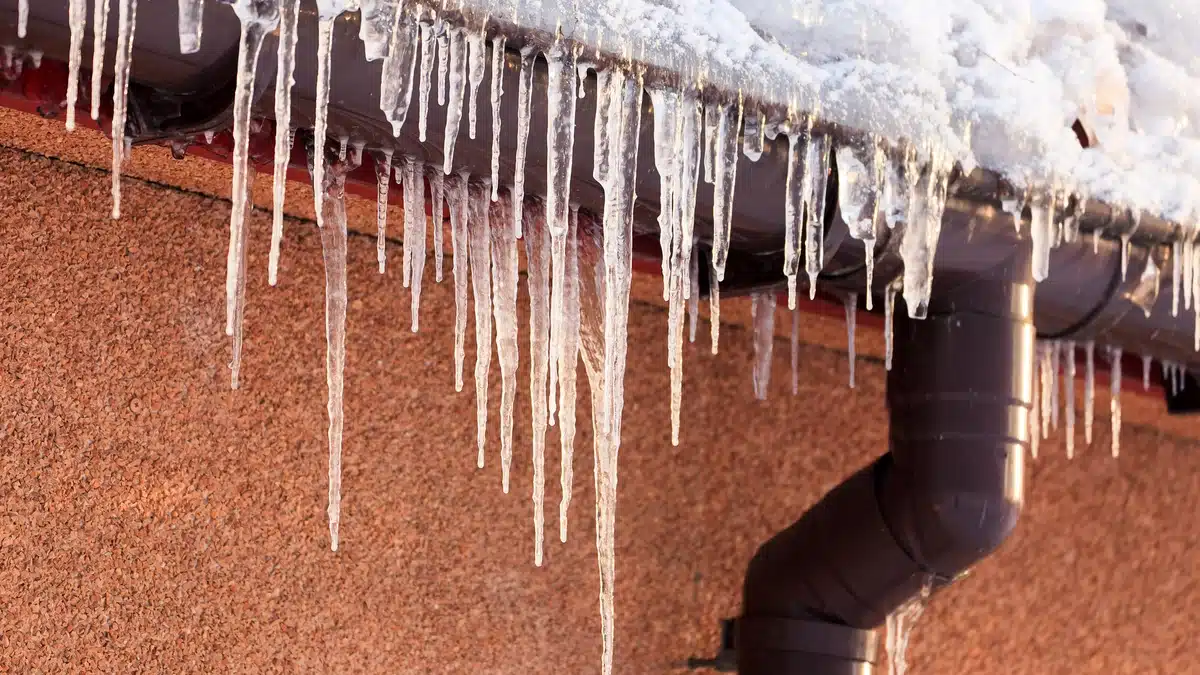
Ice damming happens when rising heat from inside your home warms the roof surface and causes snow to melt unevenly. The melted water runs down toward the roof edge, where colder air refreezes it into thick layers of ice. Over time, this ice buildup creates barriers that trap more melting water behind them. That trapped water can then seep under roof shingles, leading to leaks that damage insulation, attic framing, and interior drywall. The situation worsens with every new snowfall and freeze-thaw cycle, especially on roofs with low slope angles that prevent water from draining properly.
When ice dams grow large enough, they can tear gutters away from your home or cause water to leak through ceilings and walls. Using a roof rake after each heavy snowfall helps remove excess snow from the roof edges before it melts and refreezes. Applying ice melt products designed for roofs also helps keep drainage paths open, preventing large ridges from forming. However, homeowners should avoid chipping or breaking ice by hand, as this can crack roof shingles or damage gutter seams.
If ice has already formed thickly along the eaves, calling a professional ice dam removal company is the safest option. These specialists use controlled steam systems to melt the ice gradually without harming roofing materials. Proper insulation and ventilation remain the long-term solutions, keeping attic temperatures cold enough to match outdoor air and preventing snow from melting unevenly. Managing heat loss and maintaining airflow balance keeps your roof dry, your gutters functional, and your home protected from the freeze-thaw damage that winter weather often brings.
What Causes Ice Dams and How They Form
Homes with snow-covered roofs often experience ice damming when heat escapes through gaps near the roof line. Warm air rises from living spaces and seeps into the attic through openings around recessed lights, plumbing vents, or ceiling cracks. This unwanted heat melts the underside of the snow layer on the roof, sending water trickling downward until it reaches the colder eaves. Once it hits these freezing edges, the water refreezes and begins forming an ice ridge that blocks proper drainage. Over time, this process repeats with every thaw and freeze cycle, leading to leaks, gutter strain, and potential structural damage.
Improving air sealing within the attic is one of the most effective ways to stop heat loss. A home performance contractor can locate the specific leakage points using infrared scanning or blower door testing. These detailed inspections identify weak spots in insulation, gaps around electrical boxes, and air movement around recessed lights. Professional contractors then apply spray foam, caulking, and additional insulation to seal those pathways and restore balanced roof temperatures.
Once insulation and sealing are improved, the roof maintains a consistent temperature across its entire surface. This uniform temperature prevents uneven melting and keeps the roof deck cold enough to hold the snow until outdoor conditions naturally melt it. Following professional recommendations from a qualified home performance contractor can significantly reduce energy waste and lower your monthly energy bill. Proper attic ventilation, insulation, and air sealing together protect your home during harsh winters, keeping the roof line clear of damaging ice buildup while improving indoor comfort and long-term energy efficiency.
Icicles: Pretty but Potentially Problematic
Icicles hanging from your roof may look harmless, but they signal serious issues with heat loss and water drainage. When warm air escapes through your roof, it melts snow on the upper sections. The melted water flows down toward colder roof edges, where it refreezes and forms icicles. These frozen spikes not only reveal energy inefficiency but also point to potential roof and gutter problems that can cause costly damage if left untreated.
When icicles appear on your home, you should check for the following:
Weight and damage risk: Large icicles add extra stress to your gutters and fascia boards. Their weight can bend metal gutters, loosen fasteners, or even rip entire gutter sections off your home during prolonged cold periods.
Water leak spots: Icicles often mark areas where water collects and sits too long. These same locations can allow melted water to seep behind shingles or through tiny cracks, leading to hidden leaks inside your walls or ceilings.
Poor insulation: If icicles consistently form in the same places each winter, your attic likely lacks sufficient insulation. Warm indoor air escapes through thin insulation or air gaps, creating uneven roof temperatures that trigger ice formation.
Clogged gutters: Gutters filled with leaves, twigs, or debris stop water from draining properly. When trapped water overflows and freezes, it forms icicles along the roofline and increases the risk of ice damming.
Fixing the underlying causes of icicles helps protect your home during the winter season. Proper attic insulation, effective ventilation, and regular gutter cleaning maintain a balanced roof temperature. This combination prevents the melt-and-freeze cycle that leads to ice dams, structural strain, and water damage—keeping your home safe, efficient, and visually appealing year after year.
Signs Your Gutters and Attic Are Out of Balance
Your home gives clear warning signs when gutters and attic ventilation stop working together. These two systems play key roles in managing moisture, heat, and air movement. When either fails, your roof, attic, and energy efficiency all suffer. Knowing what to look for helps you catch small problems before they lead to expensive repairs.
Roof and ice problems: Uneven snowmelt on your roof means attic ventilation isn’t doing its job. Warm air escaping from living spaces below creates hot spots that melt snow in patches. Large icicles hanging from the roof edges often point to heat leaks through attic insulation. When air can’t circulate properly, ice builds up behind gutter guards and along eaves, increasing the risk of roof damage.
Water damage clues: Water stains that appear on your exterior walls just below the roofline signal gutter overflow. Blocked downspouts and clogged channels prevent water from draining away from your foundation, forcing it to spill over the sides. Over time, this repeated overflow can damage siding, window frames, and basement walls.
Inside your attic: During cold weather, check your attic for frost on wooden roof sheathing or rafters. This frost shows that warm, moist air from inside your home is reaching the cold attic. Poor ventilation traps this moisture, eventually causing mold growth, wood decay, and insulation breakdown that further reduce your home’s efficiency.
Gutter damage: Heavy ice buildup can cause gutters to sag or pull away from the fascia board. The added weight puts stress on the fasteners and can lead to full gutter detachment. If left unaddressed, this structural damage increases the risk of falling ice sheets and injuries during thaw cycles.
Energy cost increases: If your winter heating bills keep rising without a clear reason, your attic may be leaking heat. When insulation and ventilation fall out of balance, your furnace works harder to maintain indoor comfort. This wasted energy raises your utility costs month after month.
Why this matters: These interconnected problems can harm your home’s structure, create safety hazards, and drain your budget. Scheduling a professional inspection can identify the root cause—whether it’s inadequate insulation, blocked soffit vents, missing ridge vents, or undersized gutters—so you can fix the issues before they turn into costly repairs.
Prevention and Professional Solutions for Colorado Homes
Colorado’s winter conditions make ice dams a common problem, putting roofs and gutters at risk of damage. Homeowners benefit from professional roof maintenance services that provide comprehensive solutions, including attic insulation assessments, ventilation improvements, and heated cable installation along roof edges. These measures prevent ice buildup, protect shingles, and ensure water drains properly from gutters, reducing the likelihood of leaks and structural damage.
Home insurance providers often cover ice dam damage, but only when homeowners maintain detailed records of preventative and maintenance work. This documentation demonstrates proactive care and supports claims if roof or gutter damage occurs.
Key prevention and repair tools include attic insulation upgrades, which stabilize roof temperatures and stop heat from escaping into cold attic spaces, reducing snowmelt that leads to ice dams. Snow removal tools allow for safe clearing of roofs before snow accumulates to dangerous levels, while heat cables installed along roof edges and within gutters actively melt ice and prevent dangerous blockages. Professional ice dam removal services often use low-pressure steam methods, which protect roofing shingles and materials from damage during the removal process.
Licensed contractors assess each property for specific risks, taking into account Colorado’s unique challenges, including freeze-thaw cycles, heavy snow loads, and altitude-related temperature fluctuations. They provide tailored solutions for Front Range homes and mountain properties alike, ensuring that roofs and gutters perform efficiently throughout the winter months. Keeping records of all maintenance, repairs, and inspections not only safeguards your home’s structure but also strengthens insurance claims, giving homeowners peace of mind against Colorado’s harsh winter conditions.
Spring is the Best Time for Gutter Cleaning
Spring gutter cleaning is one of the most important seasonal [...]
Patio Icicles Hazard? Use a Heated Outlet & Diverter to a Safe Zone | Protect Your Denver Home from Ice Damage & Safety Risks
Large icicles hanging over patios pose serious winter hazards. Falling [...]
Gutter Snow Loads: How Much Is Too Much? | Prevent Ice Dams, Damage & Winter Roof Hazards in Denver Homes & Businesses
Heavy winter snow and ice can put dangerous stress on [...]
Snow Retention Systems: What Denver Builders Are Specifying in 2026
Denver builders in 2026 rely on engineered snow retention systems [...]


