


The Right Gutter Pitch: The Simple Math Most Gutter Installations Get Wrong | Ensure Proper Drainage & Prevent Costly Water Damage
Proper gutter pitch is critical for effective rainwater drainage from homes. A slope of ½ inch for every 10 feet of gutter length helps prevent water pooling and structural damage.
- Most gutter systems require a ½-inch drop for every 10 feet to function correctly. This slope allows gravity to direct water toward downspouts efficiently.
- Incorrect pitch can lead to standing water, debris buildup, and damage to gutters and foundations over time.
- Professional installers use precise methods and tools to ensure the correct gutter pitch, protecting homes from potential water damage.
The correct gutter pitch is typically a slope of 1/4 inch for every 10 feet of gutter. This slope allows rainwater to flow efficiently toward the downspouts, preventing water accumulation that can lead to damage. Ensuring this pitch is crucial for effective drainage and protecting your home from water-related issues.
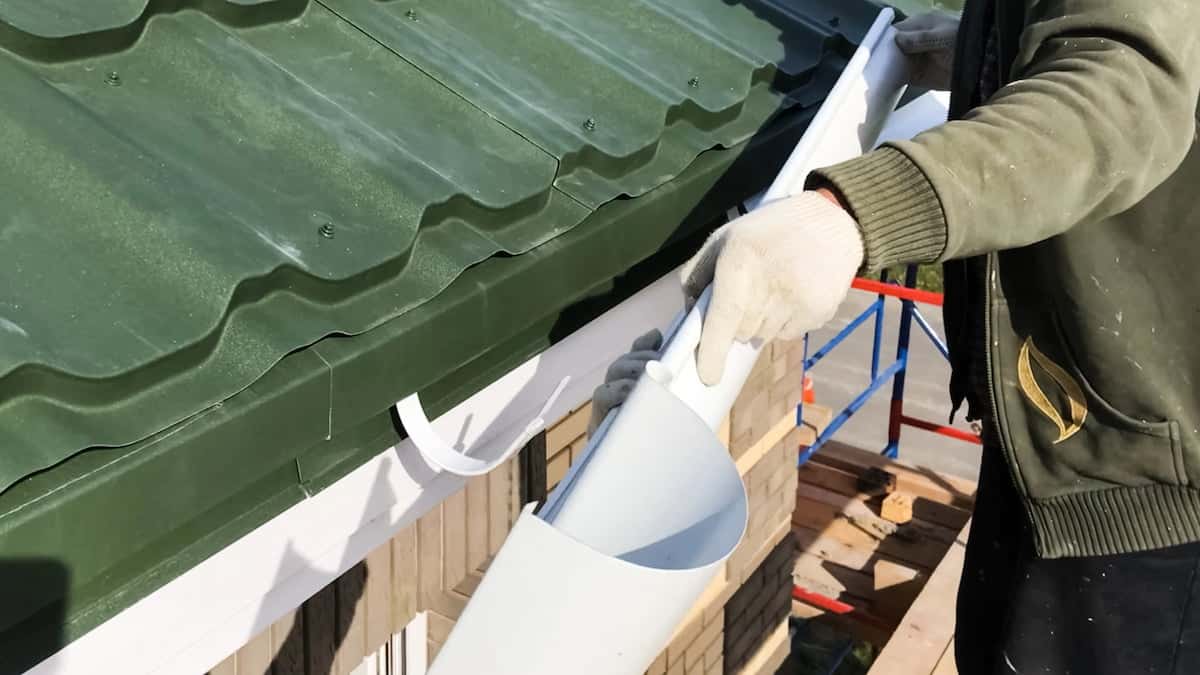
Proper gutter pitch is essential for moving rainwater away from your home. Without the correct gutter slope, water collects inside the gutters instead of draining toward the downspouts.
Most residential gutter systems require a ½-inch drop for every 10 feet of gutter length. This slight angle allows gravity to move water smoothly through the gutter system.
If the gutter pitch is too flat, rainwater pools in the channel. If the slope is uneven, water may overflow or collect debris. Understanding the correct gutter pitch helps prevent drainage failures and long-term structural damage.
What Gutter Pitch Is and Why It Matters
Gutter pitch refers to the downward slope built into the gutter system. This angle directs rainwater toward the downspout using gravity.
A properly pitched gutter system provides several important benefits:
- water flows quickly toward downspouts
- debris and leaves are less likely to collect
- standing water does not accumulate in the gutter channel
- metal gutters resist rust and corrosion
- fascia boards stay dry and protected
When gutters lack proper slope, water remains trapped inside the system. This moisture creates algae growth, rust damage, and extra weight that strains gutter brackets.
Over time, poor drainage can cause fascia rot, roof edge damage, and foundation problems.
The Correct Gutter Pitch Formula
Calculating the proper gutter slope uses a simple formula. Most installers follow a standard guideline used in residential construction.
Standard Gutter Pitch Rule
- ½ inch of drop for every 10 feet of gutter
Simple Calculation Method
- Measure the total gutter length.
- Divide the length by 10.
- Multiply the result by 0.5.
Example Calculation
For a 40-foot gutter run:
40 ÷ 10 × 0.5 = 2 inches of total drop
This means the gutter should be 2 inches lower at the downspout than at the starting point.
This measurement creates the proper gutter pitch for efficient rainwater drainage.
Common Gutter Pitch Mistakes That Cause Drainage Problems
Many gutter installations fail because contractors make simple measurement mistakes. Even small errors can prevent water from flowing correctly.
Measuring From the Wrong Reference Point
Some installers measure slope from the front edge of the gutter instead of the mounting point on the fascia board.
Correct measurement must begin at the fascia board attachment point, where the gutter actually connects to the house.
Assuming the Fascia Board Is Level
Fascia boards often sag or warp due to age and weather exposure.
If installers assume the fascia is perfectly level, the gutter system may follow the same uneven shape. This mistake creates low spots where water collects.
Skipping Slope Verification
Some installations rely only on rough measurements without confirming the slope.
Professional installers always verify pitch using:
- Carpenter’s levels
- Chalk lines
- Laser levels
These tools ensure the gutter slope remains consistent along the entire run.
Problems Caused by Incorrect Gutter Pitch
Improper gutter pitch leads to several drainage problems that affect the entire home.
Standing Water Inside Gutters
Flat sections trap water between rainfalls. This stagnant water adds weight and weakens the gutter structure.
Debris and Leaf Buildup
Leaves, dirt, and roof granules collect in low spots where water cannot flow properly.
Gutter Material Damage
Standing water speeds up deterioration:
- Metal gutters develop rust
- Aluminum gutters warp
- Seams begin to leak
Foundation and Structural Risk
When gutters overflow, rainwater falls directly near the home’s foundation. Over time, saturated soil can cause:
- foundation cracks
- basement leaks
- structural settling
A correct gutter slope prevents these long-term damage patterns.
How Professionals Ensure the Correct Gutter Pitch
Professional contractors follow precise installation methods to guarantee the correct gutter pitch.
Step 1: Establish the Downspout Location
The downspout connection becomes the lowest point in the gutter system.
Installers measure the entire gutter run from this point.
Step 2: Calculate the Required Drop
Using the standard formula, installers determine the total drop required across the gutter length.
Step 3: Mark the High Point
A chalk line or laser level marks the highest point where the gutter begins.
This line ensures the slope remains consistent.
Step 4: Install Brackets at Correct Heights
Gutter hangers are mounted along the chalk line to maintain the correct downward angle.
Spacing between brackets typically ranges from:
- 24 to 36 inches
Proper bracket spacing prevents sagging over time.
Step 5: Verify Drainage Performance
Professional installers often test the system by running water through the gutters.
This test confirms that:
- water flows smoothly
- no pooling occurs
- downspouts handle the water volume correctly
When Long Gutters Run Need Additional Downspouts
Gutters longer than 40 feet sometimes require multiple downspouts.
Long runs can slow water movement and increase the chance of pooling.
Contractors may install:
- a central high point with downspouts at both ends
- additional downspouts along the gutter run
These adjustments improve drainage efficiency and reduce stress on the gutter system.
Why Proper Gutter Pitch Protects Your Home
A correct gutter slope is one of the simplest ways to protect a home from water damage.
A properly pitched gutter system helps:
- move rainwater away from the roof edge
- prevent fascia and soffit deterioration
- reduce moisture around the foundation
- stop debris from collecting inside gutters
This small angle difference keeps the entire rainwater drainage system functioning properly.
Even a minor slope miscalculation can lead to costly repairs over time.
Wildfire Risk + Gutters: Why Insurers Are Incentivizing Debris-Free Eaves for Safer Homes
Wildfires often spread to homes through small ignition points rather [...]
The Right Gutter Pitch: The Simple Math Most Gutter Installations Get Wrong | Ensure Proper Drainage & Prevent Costly Water Damage
Proper gutter pitch is essential for moving rainwater away from [...]
Spring is the Best Time for Gutter Cleaning
Spring gutter cleaning is one of the most important seasonal [...]
Patio Icicles Hazard? Use a Heated Outlet & Diverter to a Safe Zone | Protect Your Denver Home from Ice Damage & Safety Risks
Large icicles hanging over patios pose serious winter hazards. Falling [...]


