


Clogged Downspout: Common Causes, How to Unclog It Safely, and Tips to Prevent Future Blockages
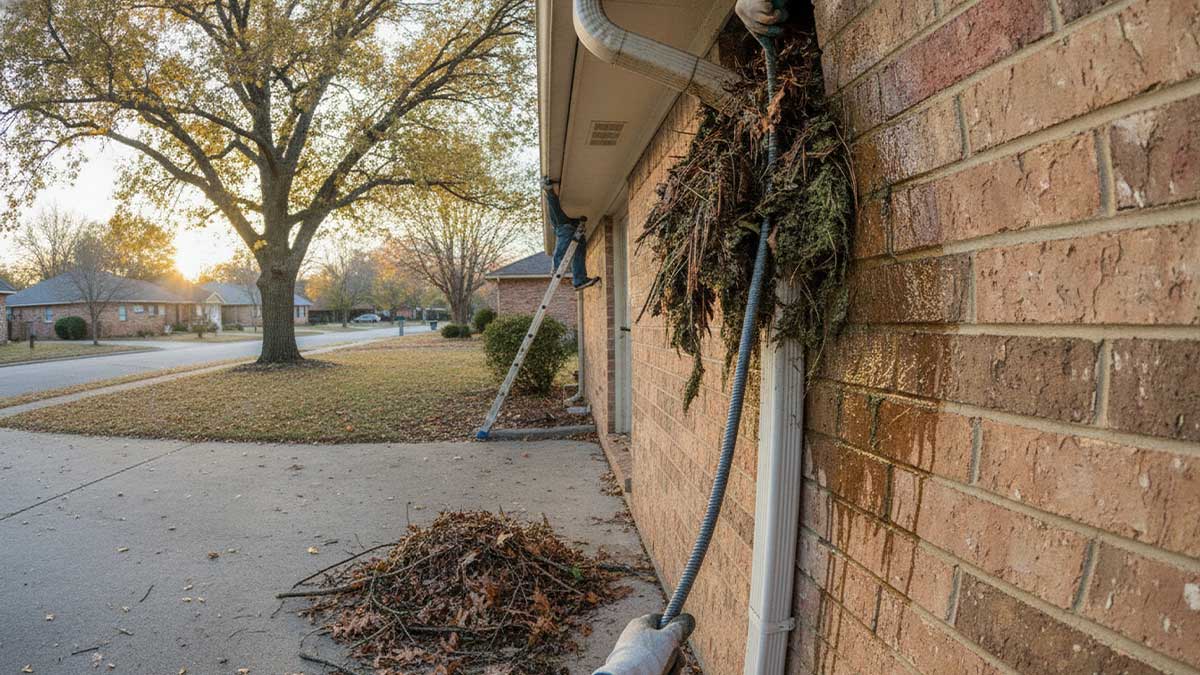
Clogged downspouts can lead to serious water damage around your home, but they can often be cleared with basic tools and maintenance. Regular cleaning and preventive measures can help avoid these issues and extend the life of your gutter system.
- The main causes of clogs include leaves, dirt, and animal nests. Regular inspections and cleaning can prevent these blockages.
- Using gutter guards can significantly reduce the amount of debris that enters the system. Flushing downspouts during cleaning is also recommended.
- If problems persist, it may be necessary to call a professional for a thorough inspection and repairs.
A clogged downspout is typically caused by debris such as leaves, twigs, and dirt accumulating inside the pipe. This blockage prevents rainwater from draining properly, leading to overflowing gutters and potential damage to your home, including roof leaks and foundation issues.
A clogged downspout prevents rainwater from flowing away from your home, causing gutters to overflow and increasing the risk of roof leaks, foundation damage, landscape erosion, and siding deterioration.
Fortunately, most downspout clogs can be removed with the right tools and a simple step-by-step process. Even better, regular gutter maintenance can prevent most blockages before they become expensive problems.
What Causes a Downspout to Become Clogged?
Understanding why downspouts clog helps you prevent recurring drainage problems and extend the lifespan of your gutter system.
Leaves and Twigs
The leading cause of clogged downspouts is fallen leaves, sticks, and small branches.
These materials wash into the downspout during rainfall and gradually create a blockage.
Prevention Tips
- Clean gutters every spring and fall
- Remove nearby tree debris
- Install gutter guards
Dirt, Roof Granules, and Mud
Fine debris collects inside gutters over time.
When mixed with water, these particles create thick sludge that can completely block a downspout.
Prevent it by:
- Flushing gutters regularly
- Inspecting roof shingles
- Removing sediment before storms
Bird Nests and Pest Activity
Birds, squirrels, insects, and rodents sometimes build nests inside gutters or downspouts.
Watch for:
- Nesting materials
- Animal activity
- Restricted water flow
Heavy Storm Debris
Strong rainstorms can quickly push large amounts of debris into a single downspout.
After every severe storm:
- Inspect gutters
- Remove fresh debris
- Flush the system
Poor Gutter Maintenance
Skipping routine gutter cleaning allows debris to compact over time.
Eventually, water cannot pass through the downspout.
Improper Gutter Slope
If gutters don’t slope correctly toward the downspout, water moves slowly.
Slow-moving water allows debris to settle instead of washing away.
Ice and Freezing Conditions
In colder climates, partially clogged downspouts trap water that freezes during winter.
Ice expansion may cause:
- Split downspouts
- Cracked gutters
- Detached brackets
Missing Gutter Guards
Without gutter protection, leaves and debris enter the system more easily.
Although gutter guards don’t eliminate maintenance, they significantly reduce clogging.
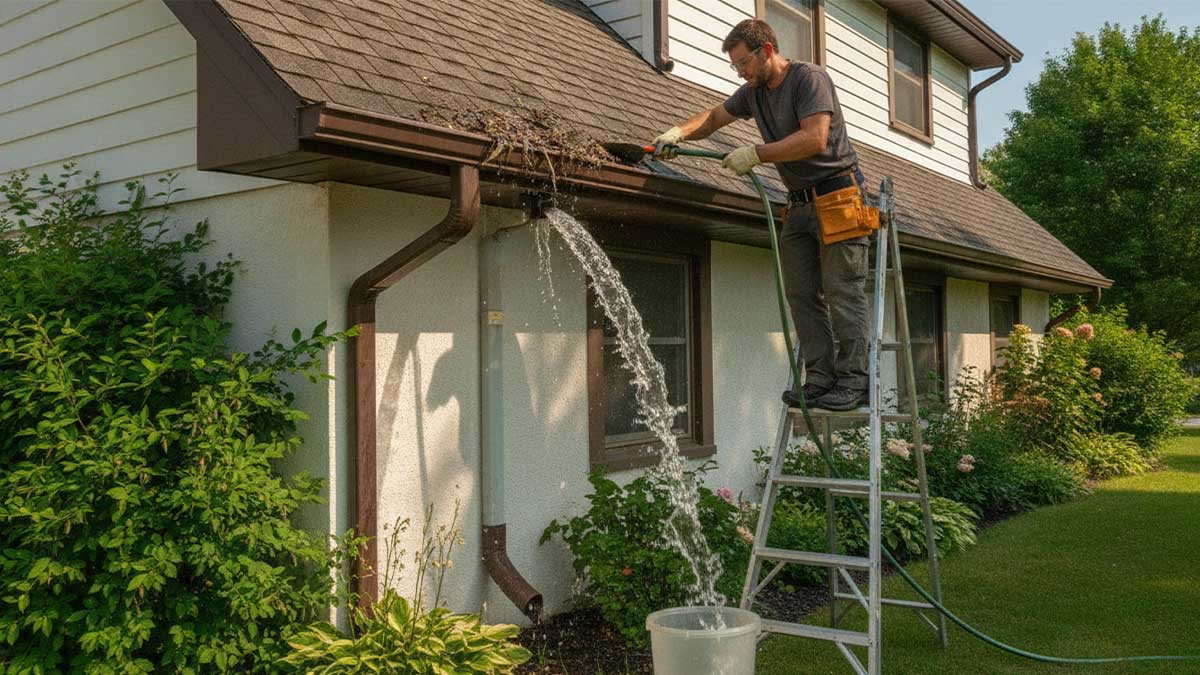
How to Unclog a Downspout Safely
Most clogged downspouts can be cleared without damaging your gutter system.
Follow these steps carefully.
Gather Your Tools
Before starting, prepare:
- Sturdy ladder
- Work gloves
- Safety glasses
- Garden hose
- Plumber’s snake
- Bucket
- Scoop
Remove Debris From the Gutters
Clear all leaves and debris before working on the downspout.
This prevents additional material from entering while you’re unclogging it.
Inspect the Top Opening
Many blockages occur near the gutter outlet.
Check for:
- Leaves
- Mud
- Pine needles
- Twigs
Remove any visible debris by hand.
Flush With a Garden Hose
Insert the hose into the downspout.
Turn on the water slowly.
If the clog is minor, the pressure may push it through.
Use a Drain Snake
If water won’t flow:
- Feed a plumber’s snake into the downspout.
- Rotate gently.
- Break apart compacted debris.
- Flush again with water.
Test Water Flow
Run water through the entire gutter system.
A properly functioning downspout should:
- Drain quickly
- Flow evenly
- Show no overflow
Inspect for Damage
After clearing the clog, look for:
- Rust
- Cracks
- Loose brackets
- Leaking joints
- Corrosion
Repairing minor issues early extends gutter life.
How to Prevent Future Downspout Clogs
Prevention is easier—and cheaper—than clearing severe blockages.
Clean Gutters Twice a Year
Schedule cleaning:
- Spring
- Fall
Clean more frequently if your home is surrounded by trees.
Install Gutter Guards
Quality gutter guards help:
- Block leaves
- Improve water flow
- Reduce maintenance
- Minimize clogs
Flush Downspouts During Every Cleaning
Even if they appear clear, flush each downspout with a garden hose to remove hidden sediment.
Trim Overhanging Branches
Cut back nearby trees to reduce:
- Leaves
- Pine needles
- Seed pods
- Small branches
Check Gutters After Storms
Heavy storms often leave behind debris.
Inspect the entire gutter system after severe weather.
Maintain Proper Gutter Pitch
Water should always flow toward the downspouts.
If standing water remains inside the gutter, have the slope adjusted.
Extend Downspouts Away From the House
Install:
- Downspout extensions
- Splash blocks
This protects:
- Foundations
- Landscaping
- Basement walls
Repair Small Problems Early
Don’t ignore:
- Loose hangers
- Leaking seams
- Rust spots
- Sagging gutters
Small repairs prevent major expenses later.
When to Call a Professional for Downspout Cleaning and Repairs
Some drainage problems require professional equipment and expertise.
Overflow Continues After Cleaning
Persistent overflow usually indicates:
- Hidden blockages
- Improper slope
- Drainage design issues
Downspouts Keep Clogging
Recurring clogs may point to:
- Poor gutter design
- Heavy tree coverage
- Incorrect downspout sizing
Gutters or Downspouts Are Damaged
Call a professional if you notice:
- Cracks
- Rust
- Corrosion
- Detached sections
- Sagging gutters
Water Pools Around the Foundation
Standing water near your home is a warning sign that your drainage system isn’t working properly.
Your Home Has Multiple Stories
Cleaning second-story gutters increases the risk of falls.
Professional gutter cleaners have the equipment and experience to perform the work safely.
You Want a Complete Drainage Inspection
Professionals inspect:
- Gutters
- Downspouts
- Fasteners
- Drainage extensions
- Water flow
- Structural issues
This helps identify problems before costly repairs become necessary.
The Best Ways to Extend the Life of Your Gutters: Expert Maintenance Tips to Prevent Damage and Maximize Durability
Your gutter system protects your roof, siding, foundation, and landscaping [...]
Clogged Downspout: Common Causes, How to Unclog It Safely, and Tips to Prevent Future Blockages
A clogged downspout prevents rainwater from flowing away from your [...]
Top Five Things to Consider When Shopping for Gutters: Expert Guide to Materials, Sizing, Durability, and Long-Term Performance
Shopping for new gutters is an important investment in your [...]
The Pros & Cons of Painting Your Gutters: Expert Guide to Benefits, Drawbacks, Costs, and Long-Term Maintenance Considerations
Painting your gutters can be an effective way to enhance [...]


